شراء العملات المشفرة
بطاقة
تداول P2P
اشتر USDT عبر السوق
بطاقة الائتمان/الخصم
اشترِ العملات المشفرة باستخدام Visa أو Mastercard
الدفع من جهة خارجية
اشترِ العملات المشفرة عبر MoonPay و Simplex والمزيد
بطاقة بيتمارت
تعزيز قدرات حياتك في مجال العملات المشفرة
بطاقة مسبقة الدفع للعملات المشفرة
احصل على بطاقة ماستركارد صالحة للاستخدام فورًا
Rewards
السحب اليومي للحسابات الآجلة
فرصة ربح مضمونة بنسبة 100% مع التداولات اليومية
السحب اليومي لحساب فوري
اكسب 8888 USDT في الجوائز الكبرى
شحن رصيد الهاتف المحمول
شحن الرصيد بسهولة، عبر الإنترنت، وبأمان
Send
Send money globally, fast and secure
BitMart Mall
بث مباشر للعملات المشفرة

Sign (SIGN)
$ 0.0067 (SIGN/USD)
3.37%
24H
Sign بيانات الأسعار المباشرة
سعر اليوم لـ Sign هو $ 0.0067 (SIGN/USD). بقيمة سوقية تبلغ $ 16.09M USD. حجم التداول خلال 24 ساعة لـ $ 3.67M USD، تغير السعر خلال 24 ساعة بمقدار +3.37%، وإمداد متداول قدره 2.39B SIGN.
Sign SIGN سجل الأسعار USD
تتبع سعر Sign لليوم، و7 أيام، و30 يومًا، و90 يومًا
الفترة
تغير
التغير (%)
اليوم
$ 0.00021
3.37%
7أيام
$ 0.00029
-4.40%
30أيام
$ 0.0018
-22.29%
90أيام
$ 0.0034
-34.80%
امتلك SIGN الآن
اشترِ وبع SIGN بسهولة وأمان على BitMart.
Sign معلومات السوق
$ 0.0064 مدى 24سا $ 0.0068
أعلى مستوى على الإطلاق
$ 0.059
أدنى مستوى على الإطلاق
$ 0.0062
تغير24سا
3.37%
حجم 24سا
$ 3,665,704.05
الإمداد المتداول
2.38B
SIGN
القيمة السوقية
$ 16.09M
الحد الأقصى للإمداد
10.00B
SIGN
القيمة السوقية المخففة بالكامل
$ 67.43M
التداول SIGN

Sign رؤى X

Krahs🦈☂️Solstice✨
Community_Lead
Media
B
 3.4K @pc970930
 محايد
Sign will host a Korean AMA in July, sharing the latest developments and answering questions.

코인소년 COINBOY🦅 D
17.8K @coinboy717 CoinBoy X Sign July AMA (conducted in Korean)
https://t.co/4LpXj1bnny
"Sharing recent Sign updates & answering your questions"
 36
36
 12
12
 976
976
2026-07-23 11:37
اتجاه SIGN بعد الإصدار
محايد
Sign will host a Korean AMA in July, sharing the latest developments and answering questions.

Xin
Founder
Regulatory_Expert
B
19.4K @realyanxin صاعد
SIGN launches soft-start forward claim market

Sign D
280.4K @Sign Forward Claim is now live in soft launch.
Locked $SIGN can now be listed and sold before it unlocks.
A dedicated forward market for vesting allocations.
Sellers list. Buyers buy. We settle daily.
🔗 https://t.co/qyujxbWUzo
48
10
9.1K
2026-07-18 14:37
اتجاه SIGN بعد الإصدار
صاعد
SIGN launches soft-start forward claim market

Crypto Solutions 🕊️
Founder
DeFi_Expert
C
40.0K @creptosolutions صاعد
SIGN team adjusts token unlock plan, aiming to reduce sell pressure and promote long‑term health.
This is a thoughtful move by the SIGN team. Rather than letting monthly unlocks create constant sell pressure, they've restructured the schedule into more manageable liquidity events without extending the overall vesting timeline or giving anyone preferential treatment.
Managing tokenomics after launch is never easy, especially when market conditions are unpredictable. Credit to the team for listening to stakeholders, staying transparent, and making a decision aimed at supporting long-term ecosystem health. That's the kind of execution that builds confidence over time.
Sign D
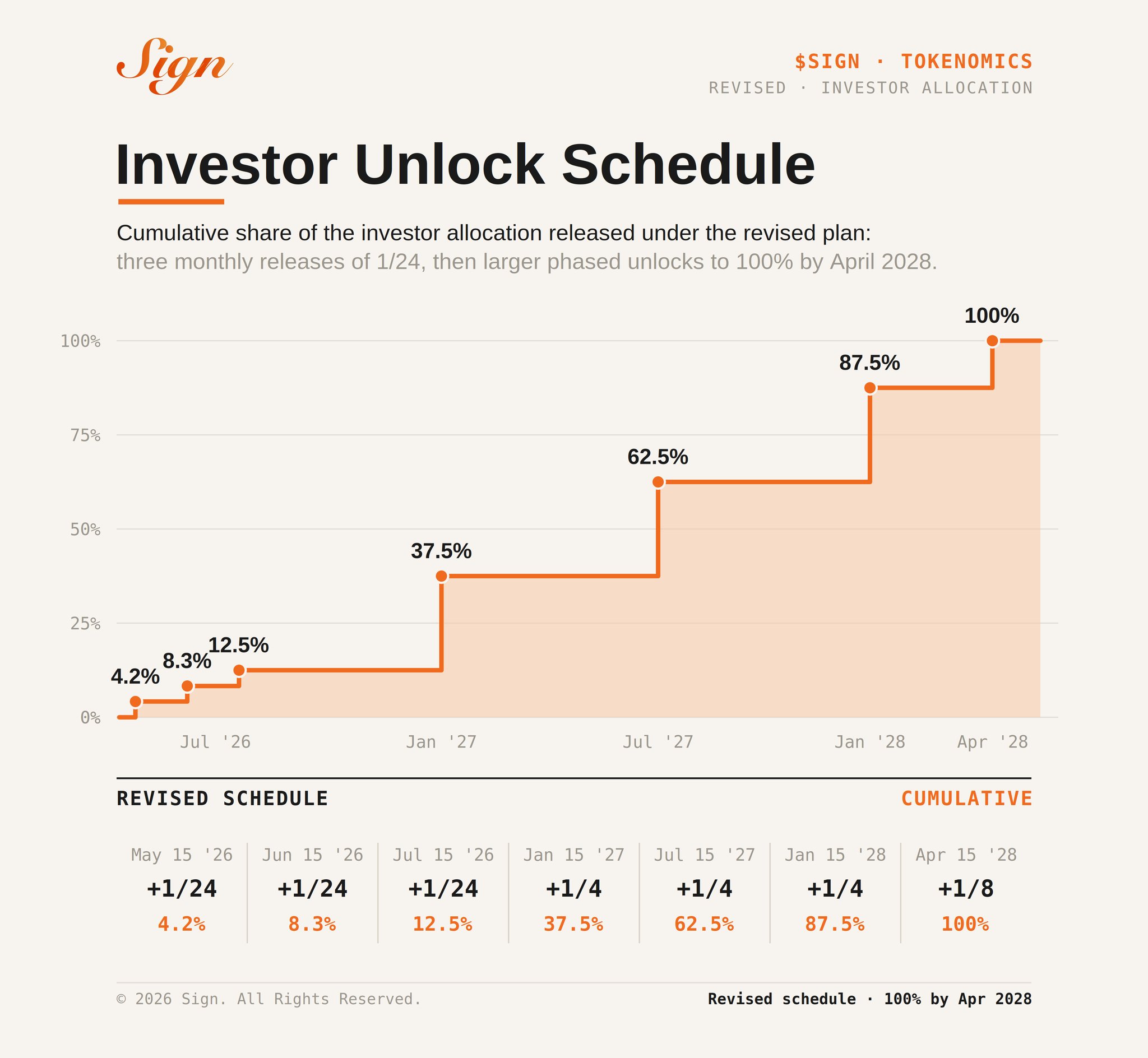
280.4K @Sign Following consensus from Sign Foundation and the majority of our backers, we are updating the $SIGN token unlock schedule.
The first three unlocks remain unchanged: 1/24 monthly through July 2026.
After that, unlocks will move into spaced tranches:
• Jan 15, 2027: 1/4
• Jul 15, 2027: 1/4
• Jan 15, 2028: 1/4
• Apr 15, 2028: final 1/8
The revised schedule is being synced to CoinMarketCap
https://t.co/3G87styC64
All investor and early contributor tokens remain fully unlocked by April 15, 2028. This is a timing restructure, not an extension. There is no preferential acceleration.
The purpose is to reduce continuous monthly overhang and turn unlocks into managed liquidity events aligned with stronger business and market windows.
We are also launching Forward Claim, a dedicated venue for locked tokens, allowing eligible holders to rebalance through an OTC-style forward market without impacting spot liquidity.
More details will follow.
 6
1
1.9K
6
1
1.9K
2026-07-02 17:37
اتجاه SIGN بعد الإصدار
صاعد
SIGN team adjusts token unlock plan, aiming to reduce sell pressure and promote long‑term health.
توقع السعر
متى يكون الوقت المناسب لشراء SIGN؟ هل يجب أن أشتري SIGN أو أبيعه الآن؟
عند اتخاذ قرار ما إذا كان الوقت مناسبًا للشراء أو البيع Sign (SIGN)، من المهم أولاً أن تتوافق مع إستراتيجيتك الخاصة في التداول وملف المخاطر الخاص بك. غالبًا ما يفسر المستثمرون على المدى الطويل والمتداولون على المدى القصير ظروف السوق بشكل مختلف، لذا يجب أن يعكس قرارك نهجك الشخصي. استنادًا إلى أحدث تحليل تقني لمدة 4 ساعات لـ SIGN، فإن إشارة التداول الحالية هي بيع. وفقًا لأحدث تحليل تقني لـ SIGN لمدة يوم واحد، فإن الإشارة الحالية هي الحيازة.

توقعات Beacon
توقعات الأسعار الاحتمالية (الـ 24 ساعة القادمة)إخلاء مسؤولية توقعات Beacon
يتم تحليل نتائج البيانات المعروضة في هذه الصفحة استنادًا إلى بيانات التداول الفعلية (OHLCV) لزوج التداول المحدد إلى جانب المؤشرات التقنية المقابلة.
هذا التنبؤ هو منتج تقني تجريبي ويتم توفيره لأغراض مرجعية فقط. ولا يشكل نصيحة استثمارية. قد تؤثر الأحداث غير المتوقعة في العالم الحقيقي بشكل كبير في سلوك السوق. يجب على المتداولين اتخاذ القرارات بحذر.
هذا التنبؤ هو منتج تقني تجريبي ويتم توفيره لأغراض مرجعية فقط. ولا يشكل نصيحة استثمارية. قد تؤثر الأحداث غير المتوقعة في العالم الحقيقي بشكل كبير في سلوك السوق. يجب على المتداولين اتخاذ القرارات بحذر.
حول Sign
Sign (SIGN) is a cryptocurrency launched in 2025and operates on the Ethereum platform. Sign has a current supply of 10,000,000,000 with 2,386,666,666 in circulation. The last known price of Sign is 0.00694338 USD and is up 1.39 over the last 24 hours. It is currently trading on 186 active market(s) with $3,969,713.67 traded over the last 24 hours. More information can be found at https://sign.global/.
اقرأ المزيد
الروابط الرسمية
مستكشف السلاسل