$DYDX : Review 📜
What if a protocol could invent an entire category, build its own sovereign blockchain to run it, ship one of the most aggressive buyback models in DeFi, and still be fighting to stay relevant?
Meet dYdX, the pioneer of on-chain perpetual futures. It did the hardest thing in the sector by decentralizing not just custody but the orderbook and matching engine themselves, onto a purpose-built Cosmos chain where validators match trades in memory. Over $1.5 trillion in cumulative volume, 200+ markets, and a token that now buys itself back with three-quarters of protocol revenue.
Let's explore why the most principled architecture in perps is also its heaviest burden. 👇
⚪ dYdX at a Glance
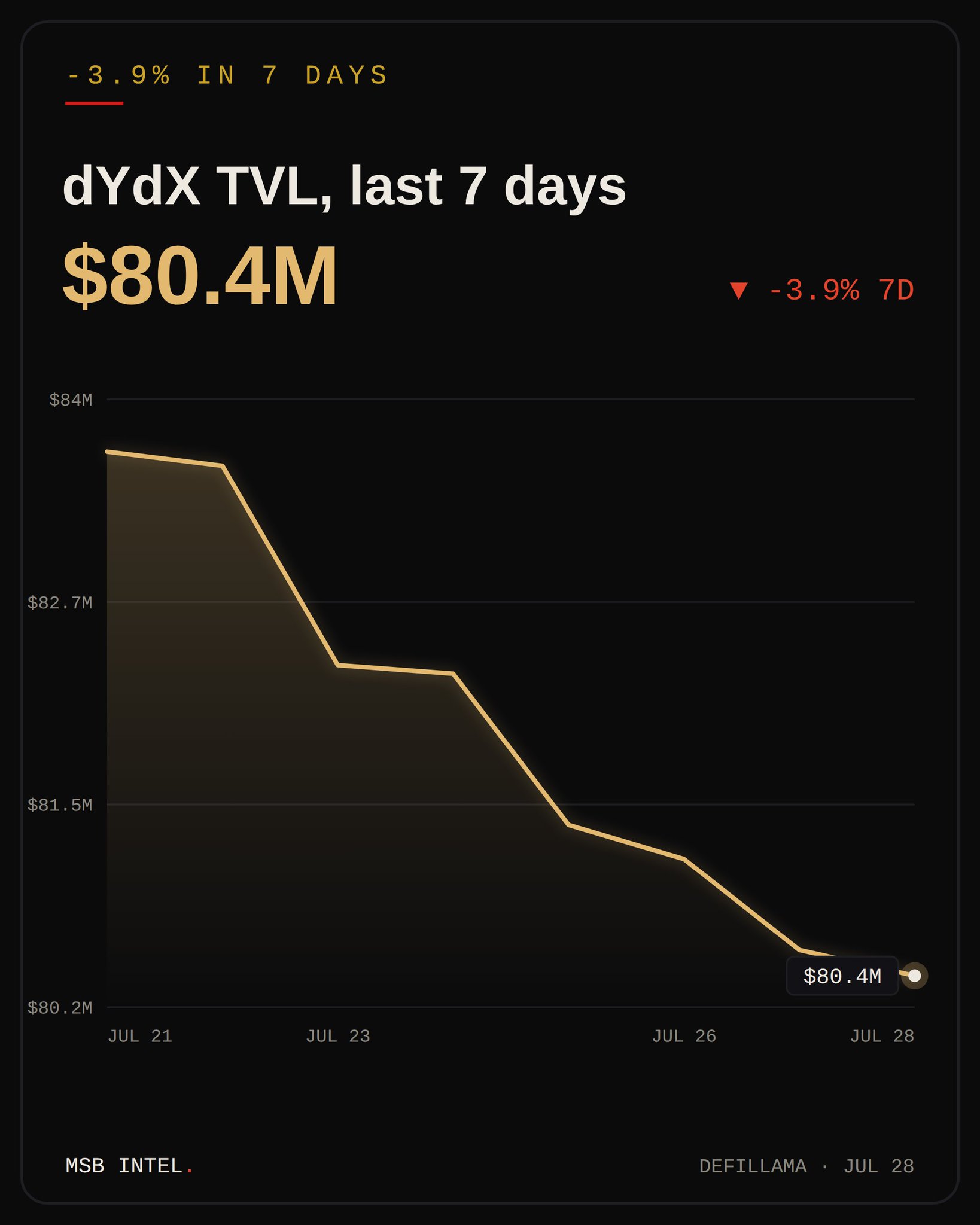
Marketplace Insight: this is the perp-DEX war seen from the loser's side of the recent chapter. dYdX invented the category and built the sovereign appchain nobody else dared to, then watched Hyperliquid take the crown and most of the order flow. The clean contrast is architectural. dYdX decentralized the matching engine itself, which is the purest expression of a decentralized exchange anyone has shipped, and that purity is simultaneously its credibility and its overhead. The $1.5T cumulative volume is real and verifiable. The open question is whether the 75% buyback, the Unlimited feature set, and a planned US debut can reverse the mindshare bleed.
⚪ Mission
dYdX exists to bring professional‑grade derivatives fully on‑chain without asking traders to give up custody or speed. The thesis is that a general‑purpose chain can never serve high‑frequency orderbook trading well, so the exchange should own its entire stack, from consensus to matching to governance, and tune every layer for perps specifically.
🔵 A Brief History
dYdX began in 2017 as Ethereum smart contracts for permissionless margin and spot trading. The breakout came with v3, a StarkEx‑based Layer 2 that launched the ethDYDX governance token on August 3, 2021, and delivered CEX‑like performance through a centralized off‑chain matching engine. It worked, but it was not truly decentralized, and that gap defined the next chapter.
In late 2023, dYdX made one of the boldest architectural bets in DeFi and migrated to v4, a standalone Cosmos chain where the orderbook and matching engine run across the validator set rather than a single operator. The native DYDX token replaced ethDYDX, and the Ethereum bridge was formally deprecated in June 2025 under Proposal #254, removing unbridged legacy tokens from supply.
Leadership went through real turbulence. Juliano resigned as CEO on May 13, 2024, moving to Chairman and President while Chief Strategy Officer Ivo Crnkovic‑Rubsamen took the seat. Six months later Juliano returned as CEO, writing that he finally felt ready to fully accept his role in what he had built.
The 2024 to 2026 stretch has been about value capture and reach. dYdX Unlimited arrived in November 2024 with MegaVault and instant market listings. The buyback launched in March 2025 at 25% of net protocol fees under Proposals #225 and #231, then tripled to 75% on November 13, 2025 under Proposal #313, passed with 59.38% approval. The July 2025 acquisition of Pocket Protector brought Telegram‑native trading, and the roadmap now points at synthetic equity perpetuals and a US market entry.
🔵 Ecosystem Narrative
The organizing idea is that a perp exchange should own its whole stack, and every feature flows from that.
➛ Decentralized orderbook chain. The top validators maintain a shared in‑memory orderbook and match trades off‑chain, committing only fills to consensus. Placing and canceling orders is gasless, which makes high‑frequency trading viable on‑chain.
➛ MegaVault. Users deposit USDC into an automated liquidity engine that seeds new markets and earns passive yield, the plumbing that makes instant listings possible.
➛ Instant market listings. Any token can be listed with immediate liquidity, no governance wait, which is the "trade anything" push against the long
tail of altcoin perps.
➛ Buyback flywheel. 75% of net protocol fees buy DYDX on the open market and stake it, tying token demand and network security directly to trading volume.
➛ Spot, multi‑asset margining, and EVM support. Delivered through IBC Eureka, extending the chain beyond pure perps toward a fuller trading venue.
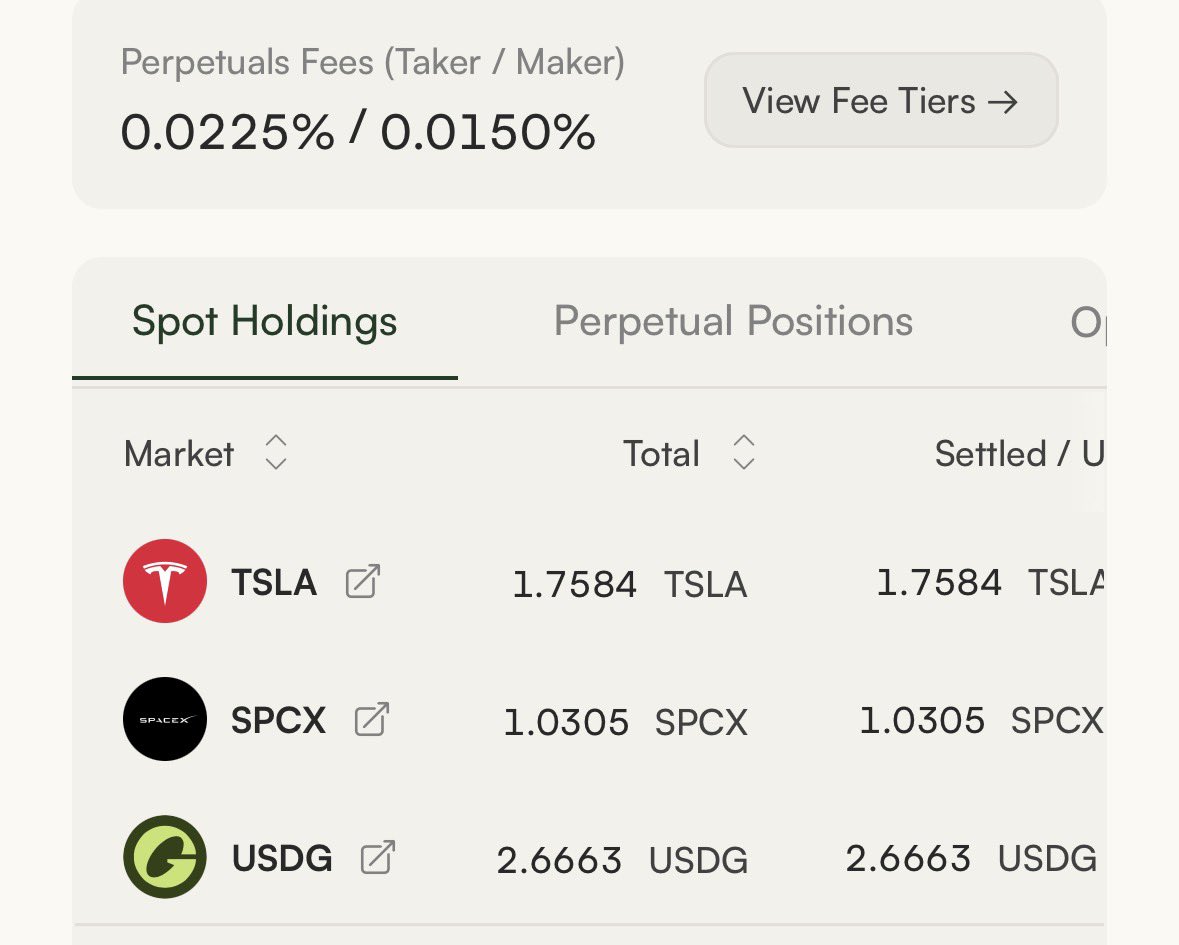
➛ Social and RWA expansion. Telegram trading and copy‑trading through the Pocket Protector acquisition, plus a roadmap into tokenized equity perpetuals starting with names like Tesla.
⚪ Token Utilities
$DYDX is embedded in the base layer of the chain rather than bolted on as
an ERC‑20.
➛ Staking and security: validators and delegators stake the token to secure the chain under a slashing model, with delegator funds exposed to validator misbehavior.
➛ Governance: any holder can open a proposal with a deposit, and votes have decided real economic parameters including the buyback ratio itself.
➛ Value accrual: 75% of net protocol fees repurchase and stake the token, the primary demand mechanism.
➛ Fee discounts: a community‑approved, staking‑based discount program links holding to trading benefits.
➛ Gas: small transaction fees on the chain are payable in the token.
⚪ Key Features
➛ Fully decentralized orderbook and matching engine, run across the validator set rather than one operator.
➛ Non‑custodial trading with up to 25x leverage on 200+ perpetual markets.
➛ Gasless order placement and cancellation, with only fills hitting consensus.
➛ CometBFT proof‑of‑stake consensus purpose‑tuned for trading throughput.
➛ Permissionless instant listings backed by MegaVault liquidity.
➛ Spot, multi‑asset margining, and cross‑chain access via IBC Eureka.
🔵 Meet the Team
dYdX runs on a deliberate split‑entity structure, which matters because the protocol's entire regulatory posture depends on it. dYdX Labs builds the open‑source software, the dYdX Foundation stewards the network, and neither operates the chain, which is run by independent validators. The protocol is not available to US persons.
▶️ Core Members:
➛ Antonio Juliano - Founder & CEO, dYdX Labs | Studied Computer Science at Princeton, worked as a software engineer at Coinbase and Uber, and founded Weipoint, a search engine for the decentralized web, before starting dYdX in 2017. Forbes 30 Under 30 in finance. Stepped down as CEO in May 2024, then returned in October 2024 to lead the Labs entity that develops the protocol software.
➛ Charles d'Haussy - CEO, dYdX Foundation | Runs the foundation that stewards governance, grants, and ecosystem growth. Previously managing director for APAC at ConsenSys and head of fintech at Hong Kong's InvestHK, bringing a policy and institutional background to the protocol's regulatory engagement.
➛ David Gogel - VP, Strategy & Operations, dYdX Foundation | Leads strategy and operations at the Foundation with a focus on institutional growth and ecosystem development, having earlier driven institutional business development for the protocol.
➛ dYdX Foundation and Operations subDAO | The stewardship and operational entities, legally and functionally separate from Labs. The Foundation administers grants and governance, while community subDAOs including Treasury and Operations run the buyback and day‑to‑day protocol operations.
➛ Validator set | The top validators secure the chain and collectively operate the orderbook and matching engine, holding the function that a centralized exchange would run in‑house.
🔵 Ratings
➛ Use Case: ★★★★ (4/5). dYdX is a genuine category pioneer with verifiable traction most protocols cannot claim: over $1.5T in cumulative volume, 200+ markets, and the only perp DEX to decentralize the orderbook and matching engine onto its own sovereign chain. The architecture is the most principled expression of a decentralized exchange in the market. The 1‑point deduction is competitive displacement. Hyperliquid took clear leadership of the perp‑DEX category, and dYdX's current volume and protocol revenue are a fraction of the leader's, which is why this lands at 4 rather than the market‑leadership tier. Pioneer status and a live sovereign chain keep it firmly above a 3.5.
➛ Tokenomics: ★★★✦ (3.5/5). The design has real strengths: a fixed 1B max supply, a multi‑year unlock schedule finishing around June 2026 so the overhang is nearly spent, genuine base‑layer utility in staking and governance, and one of the most aggressive real‑yield mechanisms in DeFi, with 75% of net fees buying back and staking the token. The 1.5‑point deduction is that the buyback is only as strong as the revenue behind it, and revenue has collapsed with volume, so at current run‑rate the repurchase pressure is a shadow of the 2024 figure when the protocol cleared $46M in net fees. Add a roughly 99% drawdown from the lineage peak and an early distribution that was heavily investor and insider weighted, and the elegant model is doing its work against a weak revenue base.
➛ Audits: ★★★★ (4/5). The dYdX Chain code was audited by Informal Systems, a firm well versed in Cosmos security, across three phases with zero critical issues and ongoing follow‑up audits into 2025. The token bridge and governance contracts were separately audited by PeckShield, and a bug bounty of up to $5M backs the live code. The 1‑point deduction is the novel attack surface beyond standard contract review: an in‑memory orderbook run across validators, custom forks of CometBFT and the Cosmos SDK, and cross‑chain bridge exposure all extend risk past what any single audit fully covers.
➛ Community: ★★★★ (4/5). dYdX has one of the more genuinely active on‑chain governance communities in DeFi, where proposals with real economic weight, including the buyback ratio itself, pass with meaningful turnout, and any holder can propose with a deposit. The brand is established, the trader base loyal, and the Foundation is a visible voice in policy debates. The 1‑point deduction is mindshare. Sentiment has been battered by the drawdown and the loss of the category crown to Hyperliquid, retail attention has migrated, and token liquidity is thin relative to the protocol's history.
🔵 Conclusion
dYdX is one of the most technically principled projects in crypto, and the numbers behind it are not aspirational. Over $1.5 trillion in cumulative volume, 200+ markets, and a sovereign chain that decentralized the orderbook and matching engine themselves, something no centralized venue and almost no DEX has done. The tokenomics have matured to match, with a fixed supply, a nearly complete unlock schedule, and a 75% revenue buyback that ties the token directly to trading activity.
The risks are real and worth naming. Hyperliquid took the perp‑DEX crown and dYdX now trades on a fraction of the leader's volume and revenue, which throttles the buyback that is supposed to power the token. The drawdown from peak is close to total. US access is restricted by design, competition is relentless, and the value‑capture flywheel only spins as fast as fees, which have fallen hard from their 2024 highs.
But the bull case is clean. If on‑chain derivatives keep taking share from centralized venues, and if traders come to prize genuine self‑custody and a decentralized matching engine over raw speed, then dYdX owns the most credible architecture in the category and one of the most aggressive value‑accrual models to go with it. dYdX proved you can decentralize an entire exchange down to the order book. What it has not yet proved is that being the most principled builder in the room still wins when a hungrier competitor is eating the order flow. The architecture says pioneer. The tape, for now, says challenger.