رشد کنید
Rewards
قرعهکشی روزانه
100% Chance To Win With Daily Trades
قرعهکشی روزانه اسپات
Win 8,888 USDT In Grand Prizes
افزایش اعتبار خط همراه
افزایش اعتبار خط همراه بهراحتی، آنلاین و ایمن
Send
Send money globally, fast and secure
BitMart Mall
Live on crypto

Sign (SIGN)
$ 0.0067 (SIGN/USD)
3.37%
24H
Sign دادههای قیمت لحظهای
قیمت امروز Sign برابر با $ 0.0067 (SIGN/USD) است. با ارزش بازار برابر با $ 16.09M USD. حجم معاملات 24 ساعته $ 3.67M USD, تغییر قیمت 24 ساعته به میزان +3.37% و عرضه در گردش برابر با 2.39B SIGN.
Sign SIGN تاریخچه قیمت USD
قیمت Sign را برای امروز، 7 روز، 30 روز و 90 روز پیگیری کنید
دوره
تغییر
تغییر (%)
امروز
$ 0.00021
3.37%
7روزها
$ 0.00029
-4.40%
30روزها
$ 0.0018
-22.29%
90روزها
$ 0.0034
-34.80%
تجارت SIGN در سه مرحله
یک حساب کاربری رایگان ایجاد کنید، حساب خود را شارژ کنید، افزودن سپس ارز دیجیتال خود را انتخاب کنید
Sign اطلاعات بازار
$ 0.0064 محدوده ۲۴ ساعته $ 0.0068
بالاترین رکورد زمانی
$ 0.059
همیشه پایین
$ 0.0062
تغییر ۲۴ ساعته
3.37%
حجم ۲۴ ساعت
$ 3,665,704.05
عرضه در گردش
2.38B
SIGN
مارکت کپ
$ 16.09M
حداکثر عرضه
10.00B
SIGN
ارزش بازار کاملاً رقیقشده
$ 67.43M
معامله SIGN
کسب درآمد حتی بدون دانش مالی
Put your idle crypto to work and earn passive income through savings, staking, and more.
Sign X Insight

Krahs🦈☂️Solstice✨
Community_Lead
Media
B
 3.4K @pc970930
 خنثی
Sign will host a Korean AMA in July, sharing the latest developments and answering questions.

코인소년 COINBOY🦅 D
17.8K @coinboy717 CoinBoy X Sign July AMA (conducted in Korean)
https://t.co/4LpXj1bnny
"Sharing recent Sign updates & answering your questions"
 36
36
 12
12
 976
976
2026-07-23 11:37
روند SIGN پس از انتشار
خنثی
Sign will host a Korean AMA in July, sharing the latest developments and answering questions.

Xin
Founder
Regulatory_Expert
B
19.4K @realyanxin صعودی
SIGN launches soft-start forward claim market

Sign D
280.4K @Sign Forward Claim is now live in soft launch.
Locked $SIGN can now be listed and sold before it unlocks.
A dedicated forward market for vesting allocations.
Sellers list. Buyers buy. We settle daily.
🔗 https://t.co/qyujxbWUzo
48
10
9.1K
2026-07-18 14:37
روند SIGN پس از انتشار
صعودی
SIGN launches soft-start forward claim market

Crypto Solutions 🕊️
Founder
DeFi_Expert
C
40.0K @creptosolutions صعودی
SIGN team adjusts token unlock plan, aiming to reduce sell pressure and promote long‑term health.
This is a thoughtful move by the SIGN team. Rather than letting monthly unlocks create constant sell pressure, they've restructured the schedule into more manageable liquidity events without extending the overall vesting timeline or giving anyone preferential treatment.
Managing tokenomics after launch is never easy, especially when market conditions are unpredictable. Credit to the team for listening to stakeholders, staying transparent, and making a decision aimed at supporting long-term ecosystem health. That's the kind of execution that builds confidence over time.
Sign D
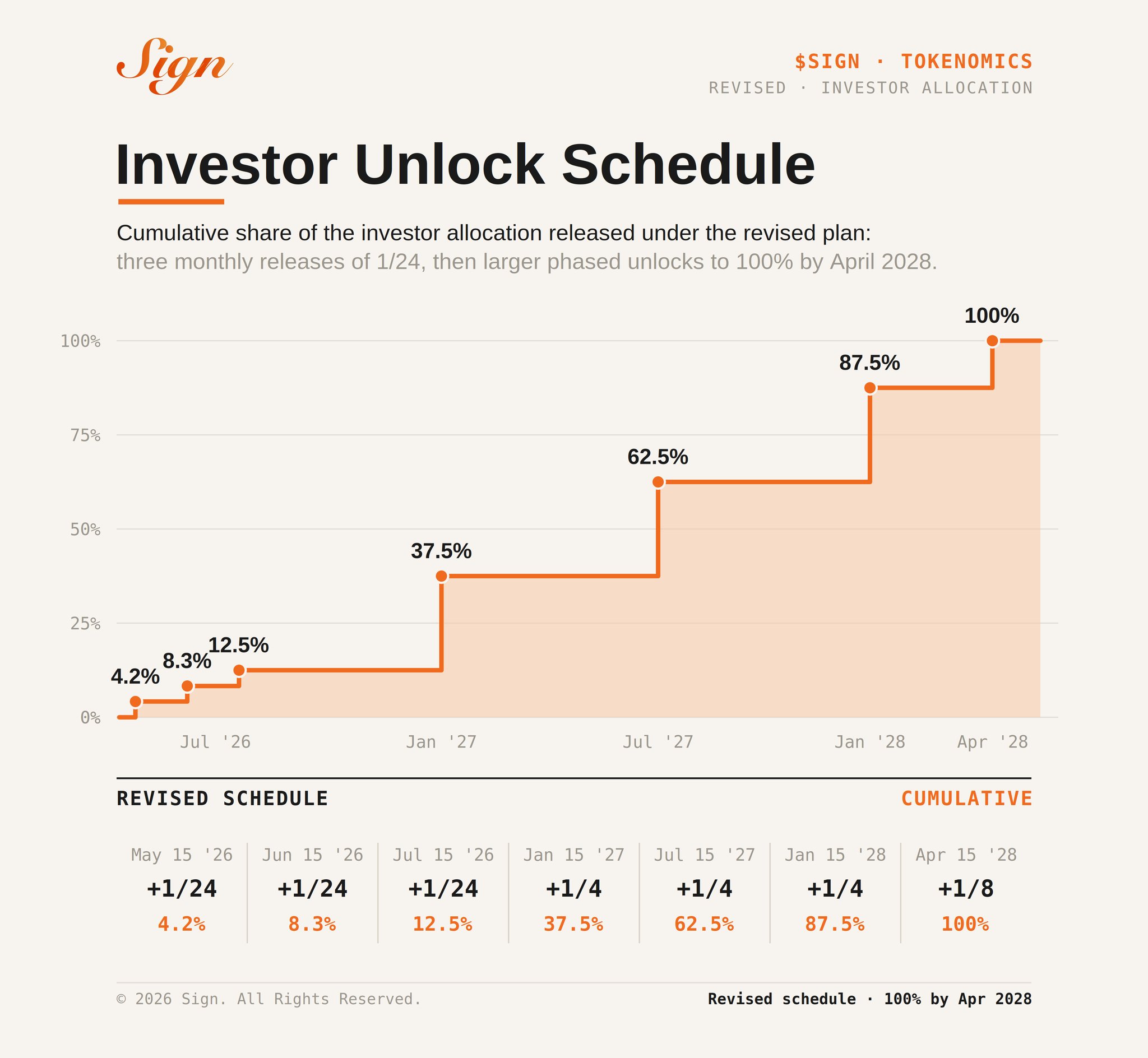
280.4K @Sign Following consensus from Sign Foundation and the majority of our backers, we are updating the $SIGN token unlock schedule.
The first three unlocks remain unchanged: 1/24 monthly through July 2026.
After that, unlocks will move into spaced tranches:
• Jan 15, 2027: 1/4
• Jul 15, 2027: 1/4
• Jan 15, 2028: 1/4
• Apr 15, 2028: final 1/8
The revised schedule is being synced to CoinMarketCap
https://t.co/3G87styC64
All investor and early contributor tokens remain fully unlocked by April 15, 2028. This is a timing restructure, not an extension. There is no preferential acceleration.
The purpose is to reduce continuous monthly overhang and turn unlocks into managed liquidity events aligned with stronger business and market windows.
We are also launching Forward Claim, a dedicated venue for locked tokens, allowing eligible holders to rebalance through an OTC-style forward market without impacting spot liquidity.
More details will follow.
 6
1
1.9K
6
1
1.9K
2026-07-02 17:37
روند SIGN پس از انتشار
صعودی
SIGN team adjusts token unlock plan, aiming to reduce sell pressure and promote long‑term health.
پیشبینی قیمت
چه زمانی برای خرید SIGN مناسب است؟ آیا اکنون باید SIGN بخرم یا بفروشم؟
از دیدگاه تجزیه و تحلیل فنی بر اساس تحلیل تکنیکال 4 ساعته SIGN، سیگنال معاملاتی فروش است. بر اساس تحلیل تکنیکال 1 روزه SIGN، سیگنال معاملاتی نگهداری است.

پیشبینی Beacon
پیشبینی احتمالی قیمت (24 ساعت آینده)اطلاعیه
بازارهای پیشبینی ذاتاً نوسانپذیر هستند. قیمت واقعی تراکنش ممکن است با قیمت نمایش دادهشده متفاوت باشد و پرداخت نهایی طبق قوانین تسویه پلتفرم تعیین میشود.
درباره Sign
Sign (SIGN) is a cryptocurrency launched in 2025and operates on the Ethereum platform. Sign has a current supply of 10,000,000,000 with 2,386,666,666 in circulation. The last known price of Sign is 0.00694338 USD and is up 1.39 over the last 24 hours. It is currently trading on 186 active market(s) with $3,969,713.67 traded over the last 24 hours. More information can be found at https://sign.global/.
بیشتر بخوانید
جستجوگر بلاکچین