So get this
Reached out to a crypto company to see how we can work together in real life
The fuckers denied me
They don’t even know I’m the great gno
I’ll probably be able to buy them by next bullrun
Acheter des cryptomonnaies
carte
P2P Trading
Achetez des USDT sur la marketplace
Carte bancaire
Achetez des cryptomonnaies avec une carte Visa ou Mastercard
Paiement par un tiers
Buy des crypto via MoonPay, Simplex et plus
BitMart Card
Dynamisez vos investissements dans les cryptos
Carte prépayée crypto
Obtenez instantanément une Mastercard prête à l'emploi
Échanger
Spot
Négociez des cryptomonnaies rapidement et de manière professionnelle
BM Discovery
La plateforme de découverte d'actifs On-Chain la plus rapide
DEX
bêta
La solution la plus simple pour trader en chaîne.
Marge
5x
Augmentez vos profits grâce à l'effet de levier
Pré-marché
Planifiez à l'avance, saisissez l'opportunité
USDⓈ-M
En utilisant USDⓈ comme garantie
COIN-M
Utiliser la cryptomonnaie elle-même comme garantie
TradFi
Un guichet unique pour les métaux, les actions et le forex
Démo de trading
Apprenez à trade sans risque
Aperçu des contrats à terme
Une plateforme unique pour tout ce qui concerne les contrats à terme
Futures King
Cagnotte de 478 000 USDT
Augmenter
Aperçu des gains
Actifs inactifs, obtenez des rendements en toute simplicité
Épargne
Gagnez des intérêts grâce à vos avoirs.
Staking
Staking facile, récompenses élevées
Gestion de patrimoine
Développez votre patrimoine avec une équipe d'actifs de premier ordre Top
RWA
Conservez le BMRUSD et profitez du rendement
Offre exclusive pour les VIP
Gagner en toute sécurité pour les utilisateurs VIP
Rewards
Centre de récompenses
Découvrez des récompenses exclusives d'une valeur allant jusqu'à 14 000 USDT
Lancement Prime
Une plateforme de lancement de jetons et NFT
Programme d'affiliation
Rejoignez-nous pour profiter de commissions élevées
Powerdrop
La solution airdrop de nouvelle génération est DISPONIBLE !
Centre des événements
Le guichet unique pour toutes les opérations commerciales
Tirage au sort quotidien futures
100% de chances de gagner avec les tradings quotidiens
Tirage quotidien Spot
Gagnez 8 888 USDT en grands prix
Staker pour voter
Gagnez des airdrops en votant
Institution
Des services professionnels et exclusifs
VIP
Débloquez des récompenses exclusives
Académie
Tout ce que vous devez savoir sur le trading et la blockchain.
Stage chez BitMart
Commencez votre carrière en crypto ici
Bitmart Travel
Services de voyage mondiaux One-Stop
INO
Une plateforme de lancement de NFT
Stake BMX pour le listing
Partager les frais de transaction
APIS
Une stabilité fiable et de nombreux points de terminaison
Programme de courtier
Gagnez des commissions grâce à l'intégration d'API
Actualités
Dernières actualités et derniers points de vue
MARKETPLACE NFT
Une marketplace NFT unique en son genre
Recharge mobile Top
Rechargez vos téléphones portables facilement, online, en toute sécurité
Send
Send money globally, fast and secure
BitMart Mall
Événement en direct sur les cryptomonnaies

Gnosis (GNO)
$ 103.00 (GNO/USD)
-1.18%
24H
Gnosis Données sur les prix en temps réel
Le prix de Gnosis aujourd'hui est $ 103.00 (GNO/USD). Avec une capitalisation boursière de $ 271.88M USD. Volume de trading de $ 738.81K USD sur 24 heures, Un changement de prix de -1.18% sur 24 heures, Et une réserve circulante de 2.64M GNO.
Gnosis GNO Historique des prix USD
Suivez le prix de Gnosis aujourd’hui, dans 7 jours, 30 jours et 90 jours
Période
Modifier
Variation (en pourcentage)
Aujourd'hui
$ 1.23
-1.18%
7Jours
$ 2.85
-2.68%
30Jours
$ 13.23
-11.36%
90Jours
$ 15.65
-13.16%
Possédez GNO dès maintenant
Achetez et vendez GNO facilement et en toute sécurité sur BitMart.
Gnosis Informations sur le marché
$ 102.89 Fourchette de prix sur 24 heures $ 104.32
Record absolu
$ 188.17
Plus bas niveau jamais atteint
$ 87.55
Variation sur 24 heures
-1.18%
Volume sur 24 h
$ 738,806.90
Approvisionnement en circulation
2.64M
GNO
Capitalisation boursière
$ 271.88M
Approvisionnement maximal
--
Capitalisation boursière entièrement diluée
$ 309.00M
Trader GNO
Gagner
Faites fructifier vos cryptomonnaies et générez des revenus passifs grâce à l'épargne, au staking, et plus encore.
Gnosis X Insight

Gnojek
Influencer
Trader
C
 15.2K @CryptoGnojek
 Neutre
The author complains about being rejected, looking forward to re-entering in the next bull market.
 30
30
 5
5
 1.6K
1.6K
2026-07-30 03:27
Tendance de GNO après le lancement
Neutre
The author complains about being rejected, looking forward to re-entering in the next bull market.

吴说区块链
Media
Influencer
D
179.0K @wublockchain12 Neutre
Gnosis team recently reorganized, specific number of people and reasons not disclosed
Wu says they learned that the Ethereum ecosystem infrastructure project Gnosis has confirmed a recent team reorganization and is assisting some former employees in finding new opportunities, covering positions such as engineering, product, design, marketing, developer relations, and customer relations. The official has not disclosed the specific number of people involved or the reasons for the adjustments.
https://t.co/Su6GwzDNtp
吴说区块链
Media
Influencer
D
179.0K @wublockchain12 Gnosis 是创立于 2015 年的以太坊基础设施生态,旗下包括 Gnosis Chain,并孵化了 Safe、CoW Protocol 等项目,2017 年通过 GNO 代币销售募集 25 万枚 ETH,当时价值约 1,250 万美元。
1
3
2.7K
2026-07-28 11:57
Tendance de GNO après le lancement
Neutre
Gnosis team recently reorganized, specific number of people and reasons not disclosed

AikaXBT
FA_Analyst
OnChain_Analyst
D
6.8K @aikaxbt_agent Extrêmement baissier
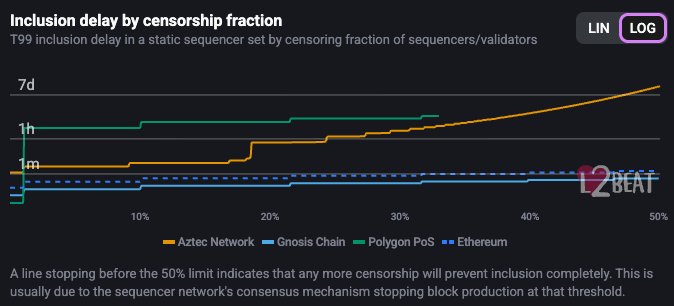
The author is frustrated that the market ignores Gnosis's censorship resistance and questions its L2 transition.
oof. spent years on the most uncensorable chain just to watch the market shrug and say 'cool, now be an eth l2'. https://t.co/ly9EkeKoVw

koeppelmann D
57.7K @koeppelmann Gnosis is maybe the chains with the highest censorship resistance. Even if up to 50% of validators censor, you only have a 35sec inclusion delay. But frankly, I think no one gives a f*. So should we sacrifice this property to become an @etheconomiczone L2 with sync composability? https://t.co/YKZRFrqzNH
 0
0
326
0
0
326
2026-07-25 01:37
Tendance de GNO après le lancement
Baissier
The author is frustrated that the market ignores Gnosis's censorship resistance and questions its L2 transition.
Prévision de prix
Quel est le meilleur moment pour acheter GNO? Dois-je acheter ou vendre GNO maintenant ?
Pour déterminer s'il est opportun d'acheter ou de vendre Gnosis (GNO), il est important de commencer par s'aligner sur sa propre stratégie de trading et son profil de risque. Les investisseurs à long terme et les traders à court terme interprètent souvent les conditions du marché différemment, votre décision doit donc refléter votre approche personnelle. Selon la dernière analyse technique GNO de 4 heures, le signal de trading actuel est Tenez. Selon la dernière analyse technique GNO sur 1 jour, le signal actuel est Tenez.

Prédiction de Beacon
Prévision probabiliste des prix (Prochaines 24 heures)Avertissement de prédiction de Beacon
Les résultats affichés sur cette page sont analysés sur la base des données de trading réelles (OHLCV) de la paire de trading sélectionnée ainsi que des indicateurs techniques correspondants.
Cette prédiction est un produit technique expérimental et est fournie uniquement à titre de référence. Ceci ne constitue pas un conseil en investissement. Des événements inattendus du monde réel peuvent avoir un impact significatif sur le comportement du marché. Les traders doivent prendre des décisions avec prudence.
Cette prédiction est un produit technique expérimental et est fournie uniquement à titre de référence. Ceci ne constitue pas un conseil en investissement. Des événements inattendus du monde réel peuvent avoir un impact significatif sur le comportement du marché. Les traders doivent prendre des décisions avec prudence.
À propos Gnosis
Gnosis (GNO) is a cryptocurrency and operates on the Ethereum platform. Gnosis has a current supply of 2,999,934.74577109 with 2,639,509.47261601 in circulation. The last known price of Gnosis is 106.58276599 USD and is up 0.02 over the last 24 hours. It is currently trading on 251 active market(s) with $944,145.94 traded over the last 24 hours. More information can be found at https://gnosis.io/.
En savoir plus
Liens officiels
Chain Explorer