
Open USD (OUSD), this new stablecoin, will run directly on Ethereum from day one.
OUSD is the one previously mentioned that is created by more than 140 companies, a powerful list: Visa, Mastercard, Stripe, BlackRock, BNY, as well as Coinbase, Google, etc. It is not issued by a single company, but by these large companies/institutions together as a “shared stablecoin”.
Because there are many participants, there have been many controversies before.
Its most special feature is:
The interest (revenue) earned from the reserve funds is almost entirely given to the partners that help promote and use it.
This differs from current USDC/USDT, where most of the earnings are taken by the issuers (Circle/Tether).
Rewards
Futures Daily Draw
100% Chance To Win With Daily Trades
Spot Daily Draw
Win 8,888 USDT In Grand Prizes
Mobile Top-Up
Top up mobiles easily, online, secure
Send
Send money globally, fast and secure
BitMart Mall
Live on crypto

Origin Dollar (OUSD)
$ 0.99 (OUSD/USD)
0.00%
24H
Origin Dollar Live Price data
Today's price of Origin Dollar Is $ 0.99 (OUSD/USD). With A Market Cap Of $ 5.72M USD. 24-Hour Trading Volume Of $ 4,093.35 USD, A 24-Hour Price Change Of +0.00%, And A Circulating Supply Of 5.73M OUSD.
Origin Dollar OUSD Price History USD
Track the price of Origin Dollar for today, 7 days, 30 days and 90 days
Period
Change
Change (%)
Today
$ 0
0.00%
7days
$ 0
0.00%
30days
$ 0
0.00%
90days
$ 0
0.00%
Own OUSD Now
Buy and sell OUSD easily and securely on BitMart.
Origin Dollar Market Information
$ 0.99 24h Range $ 0.99
All time high
$ 1.02
All time low
$ 0.98
24h Change
0.00%
24h Vol
$ 4,093.35
Circulating supply
5.72M
OUSD
Market cap
$ 5.72M
Max supply
--
Fully diluted market cap
$ 5.72M
Trade OUSD
Origin Dollar X Insight

蓝狐
FA_Analyst
Influencer
B
 73.4K @lanhubiji
 Bullish
New stablecoin OUSD is launched jointly by many companies, to be issued on Ethereum, with a unique revenue distribution model.

Ethereum Institutional D
208 @ethereuminsti Breaking: Open USD will launch on @ethereum on day one.
Over 140 businesses, including Visa, Mastercard, Stripe, BlackRock and BNY. All reserve earnings flow to the partners that grow it.
A shared asset needs neutral ground.
We're excited to be working with @openstandard on their Ethereum journey.

 54
54
 49
49
 14.4K
14.4K
2026-07-31 15:17
Trend of OUSD after release
Bullish
New stablecoin OUSD is launched jointly by many companies, to be issued on Ethereum, with a unique revenue distribution model.

BlockNews
Media
Influencer
D
90.1K @blocknewsdotcom Bullish
Visa is supporting Open USD, aiming to facilitate connections within the stablecoin ecosystem without directly competing with USDT/USDC.
🚨 JUST IN: Visa is supporting Open USD ($OUSD) but says it is not trying to compete directly with Tether’s USDT or Circle’s USDC.
Visa CEO Ryan McInerney said the company’s role is to help clients connect to the stablecoin ecosystem securely and at scale, regardless of which stablecoin gains adoption.

 12
3
3.8K
12
3
3.8K
2026-07-29 15:17
Trend of OUSD after release
Bullish
Visa is supporting Open USD, aiming to facilitate connections within the stablecoin ecosystem without directly competing with USDT/USDC.

Cypress Demanincor
Trader
DeFi_Expert
B
48.5K @CDemanincor Extremely Bullish
Visa integrates blockchain technology seamlessly into traditional finance through its stablecoin platform, heralding a major transformation in the financial industry.
How many people carry a Visa card every day without realizing blockchain is already being integrated behind the scenes?
Probably hundreds of millions.
Visa has billions of cards in circulation, yet most users will never know when stablecoins become part of the payment infrastructure.
That's because successful technology doesn't require the end user to understand it.
Just like people use the internet without knowing HTTP or TCP/IP, tomorrow's financial system will likely run on blockchain rails without consumers ever thinking about "crypto."
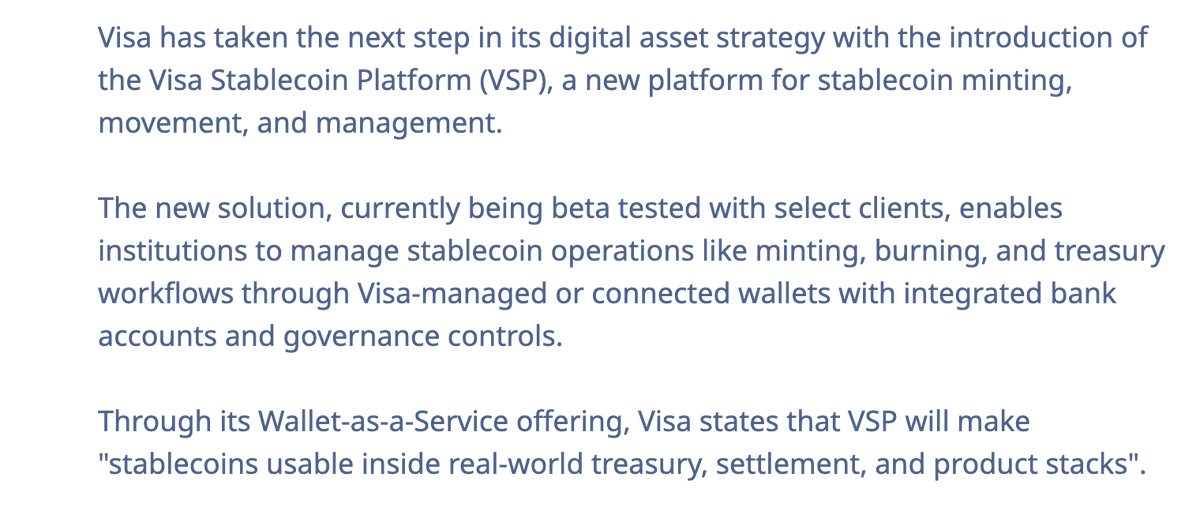
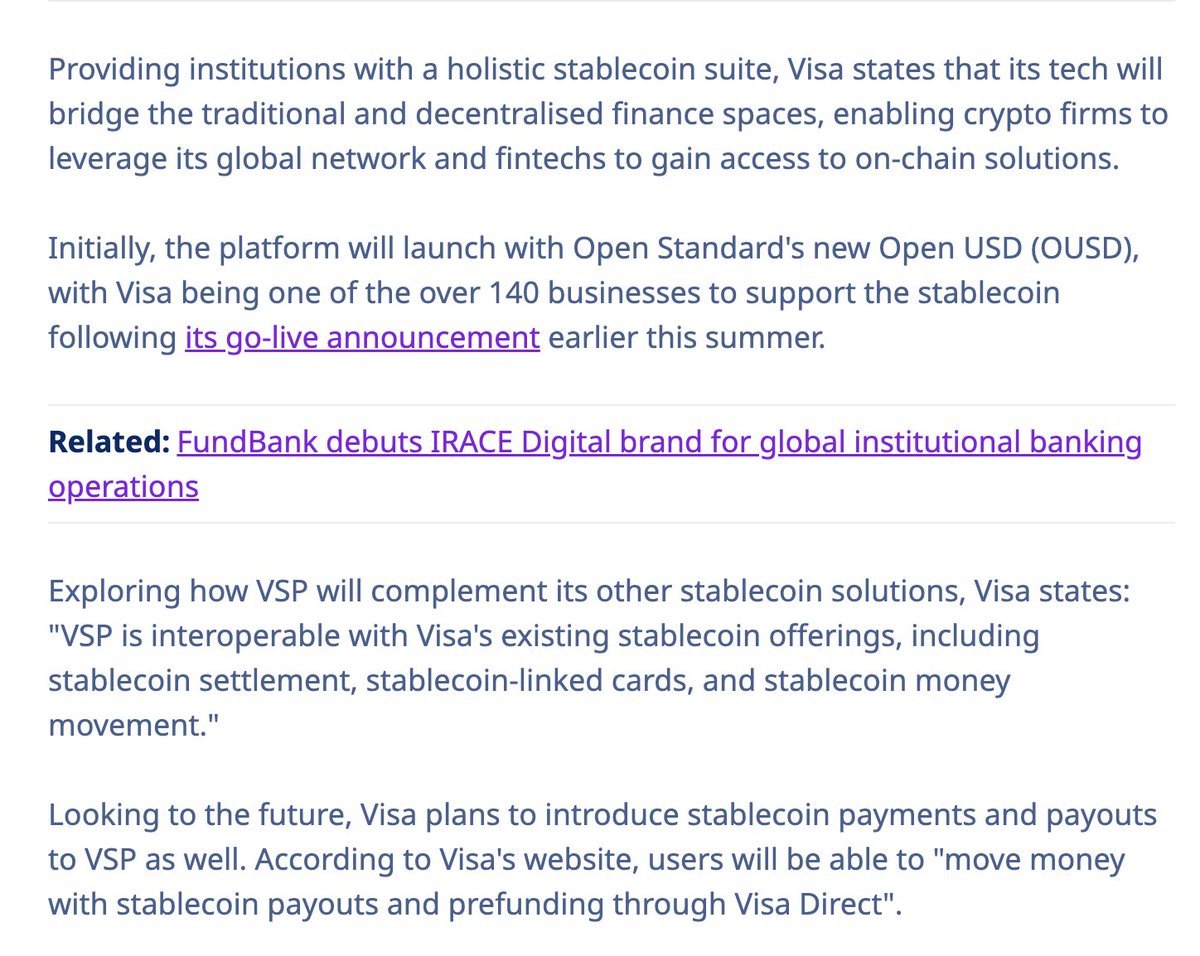
Visa's Stablecoin Platform isn't about replacing cards it's about giving banks and institutions the ability to mint, manage, settle, and move stablecoins within existing financial infrastructure.
The biggest changes in finance won't happen when everyone starts talking about blockchain.
They'll happen when people stop noticing it altogether.

 113
3
11.8K
113
3
11.8K
2026-07-24 20:27
Trend of OUSD after release
Extremely Bullish
Visa integrates blockchain technology seamlessly into traditional finance through its stablecoin platform, heralding a major transformation in the financial industry.
Price Prediction
When is a good time to buy OUSD? Should I buy or sell OUSD now?
When deciding whether it’s a good time to buy or sell Origin Dollar (OUSD), it’s important to first align with your own trading strategy and risk profile.Long-term investors and short-term traders often interpret market conditions differently, so your decision should reflect your personal approach. According to the latest OUSD 4-hour technical analysis, the current trading signal is Hold. According to the latest OUSD 1-day technical analysis, the current signal is Hold.

Beacon Prediction
Probabilistic Price Forecast (Next 24 Hours)Beacon Prediction Disclaimer
The data results displayed on this page are analyzed based on actual trading data (OHLCV) of the selected trading pair along with corresponding technical indicators.
This prediction is an experimental technical product and is provided for reference purposes only. It does not constitute investment advice. Unexpected real-world events may significantly impact market behavior. Traders should make decisions with caution.
This prediction is an experimental technical product and is provided for reference purposes only. It does not constitute investment advice. Unexpected real-world events may significantly impact market behavior. Traders should make decisions with caution.
About Origin Dollar
Origin Dollar (OUSD) is a cryptocurrency and operates on the Ethereum platform. Origin Dollar has a current supply of 5,728,981.79577081. The last known price of Origin Dollar is 0.99977306 USD and is up 0.03 over the last 24 hours. It is currently trading on 61 active market(s) with $47,403.79 traded over the last 24 hours. More information can be found at https://www.ousd.com.
Read More